人教高中英语高二下UNIT16-3
时间:2018-12-29 作者:英语课 分类:人教高中英语高二

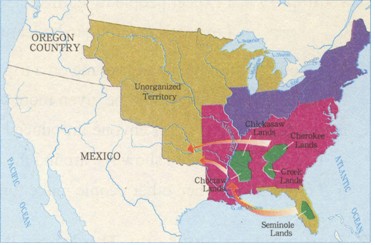

THE TRAIL OF TEARS
For thousands of years, Native Americans lived as hunters in North America. There were millions of people, with many different cultures, religions and languages. In 1492, Columbus arrived in America and soon after the first European settlers followed. Native Americans were either killed or driven off their land and many died of diseases 1 that the newcomers brought to the continent. Over the next three hundred years, ninety percent of America's original population was killed by wars, diseases or starvation.
The white settlers wanted their land, and the Native Americans could not protect their homes and farms. From around 1790 to 1830, Native American tribes 3 tried to solve the problem with the US government. Several agreements were reached, but the government broke its promises almost every time. Finally, by the 1830s, the government decided 4 to remove the Native Americans from their own land to make room for European settlers. One by one, the Native American tribes were moved west. Indians who resisted were killed.
One of the best-known examples of the hardships suffered by the Native Americans is the sad story of the Cherokee tribe 2. The Cherokees lived in the southeast of the United States. They lived by farming, hunting and fishing and had been able to adapt to modern society. The Cherokees had built homes and farms, developed a written language and made their own laws. Despite their hard work, the Cherokees were not treated fairly. When the government began driving the Native Americans away, the Cherokees were among the last to go. In 1838, the government began putting Cherokee men, women and children in camps and made them walk a thousand miles. The winter was cold and there was not much food. About 4,000 Cherokees died during the march, which became known as the "Trail of Tears" or "the trail where they cried".
In the years that followed, Native Americans lived through one of the darkest times in their history. By the end of the nineteenth century, only some 250,000 Native Americans had survived. Their culture and way of life had been destroyed, their land had been taken away from them, and they were not given the rights most other Americans enjoyed. Most of the Native Americans were forced to live in special places, called "reservations 5", often in poor areas with few resources, given to them by the government. Few Native Americans were able to get an education and many lived in poverty.
In the twentieth century, Native Americans began to gather strength again. The Civil Rights Movement was succeeding and some of the basic rights were given to Native Americans for the first time in history. Their culture and history were included in school history books and some of the languages began to be taught again. Much had been lost and destroyed over the past 300 years, but the spirit of the Native Americans had not been broken. Today, Native Americans are beginning to receive the respect they deserve 6 and their culture is recognized as an important part of American history. In 2004, a National Museum was opened to honor 7 the first Americans and to remind us all not only of the pain and suffering caused by the Trail of Tears and other sad times, but also of the joy, beauty and strength of Native American culture and history.
The Trail of Tears has not been forgotten. In fact, the terrible march has created a beautiful story, that of the Cherokee Rose. According to the story, the tears of the Cherokee mothers turned into flowers as they fell to the ground. The flower, a rose, is white as the tears and has a gold center, representing the gold that was taken from the Cherokee lands. The rose has seven leaves, one for each group of Cherokees that marched on the Trail of Tears. The flower still grows along the trail and it is now the state flower of Georgia.
- Smoking is a causative factor in several major diseases. 抽烟是引起几种严重疾病的病因。
- The illness frequently coexists with other chronic diseases. 这种病往往与其他慢性病同时存在。
- This is a subject tribe.这是个受他人统治的部落。
- Many of the tribe's customs and rituals are as old as the hills.这部落的许多风俗、仪式都极其古老。
- tribes living in remote areas of the Amazonian rainforest 居住在亚马孙河雨林偏远地区的部落
- In Africa the snake is still sacred with many tribes. 非洲许多部落仍认为蛇是不可冒犯的。 来自《简明英汉词典》
- This gave them a decided advantage over their opponents.这使他们比对手具有明显的优势。
- There is a decided difference between British and Chinese way of greeting.英国人和中国人打招呼的方式有很明显的区别。
- Most of these workers are American Indians living on reservations. 这些工人中的大多数是住在居留地的美洲印第安人。 来自《简明英汉词典》
- Have you made the reservations for our holiday yet? 你为我们度假做好预订安排了吗? 来自《简明英汉词典》