step by step 第三册 lesson 102
时间:2018-12-27 作者:英语课 分类:英语听力入门 (全四册)
Lesson 102 Part Ⅰ
Lesson 102
Part Ⅰ Warming-up Exercises
Note-taking: Language and People
Languages Speakers
1._________________ _________________
2._________________ _________________
3._________________ _________________
4._________________ _________________
5. Hindi _________________
6._________________ _________________
7. Portuguese _________________
8._________________ _________________
9._________________ _________________
10.________________ _________________
11. Urdu _________________
12.________________ _________________
13.________________ _________________
14.________________ _________________
15.________________ _________________
16.________________ _________________
17.________________ _________________
18. Persian _________________
19.________________ _________________
20.________________ _________________
Score: ____
Lesson 102 Part Ⅱ
Lesson 102
Part Ⅱ Why Learn Foreign Languages ? (Ⅰ)
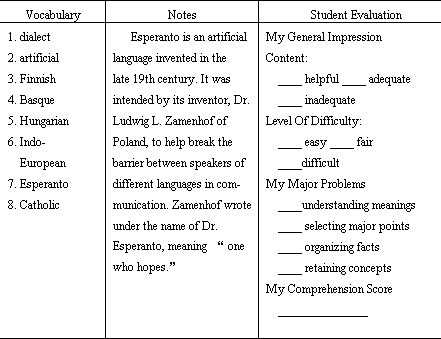
Exercises:
Ⅰ.
Notes
Q. 1:________________________________________
A. 1:________________________________________
Q.2:________________________________________
A. 2:________________________________________
Ⅱ. 1.---- Most European languages belong to the Indo-European group
of languages.
2. ---- Finnish, Basque and Hungarian are in the Indo-European language
group.
3. ---- Latin 1, Greek, English, German and many other languages are
connected with each other.
4. ---- Backward means of communication and transportation in ancient
Switzerland and England caused people to speak different dialects 2.
5. ---- It is an awfully 3 good idea to use Esperanto and so people will
sooner or later set out to learn the new language.
Lesson 102 Part Ⅲ
Lesson 102
Part Ⅲ Why Learn Foreign Languages ?(Ⅱ)
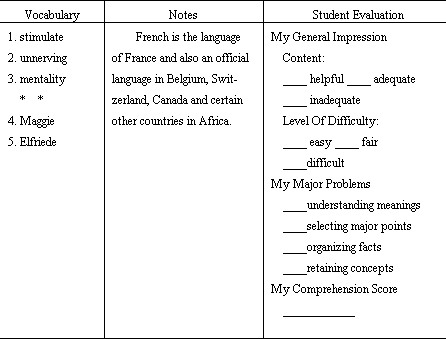
Exercises:
Q. 1:_____________________________________________
A. 1:_____________________________________________
Q. 2:_____________________________________________
A. 2:_____________________________________________
Q. 3:_____________________________________________
A. 3:_____________________________________________
Q. 4:_____________________________________________
A. 4:_____________________________________________
Ⅱ. In this conversation, we can hear three speakers. The first speaker is the one who raises some questions. The second is an English lady who thinks that learning 4 a foreign language at school tends to be rather a… , and it's very difflcult to … among school children. She also thinks that English people traditionally thought that foreigners … , which is not true. When you are actually in another country, you feel the need to learn the language. Her own experience tells her that … . The third speaker comes from … . Her opinion is that … . It takes a very long time to learn English humour. Anyhow she finds it fascinating to be able to express … and to … with the British people.
- She learned Latin without a master.她无师自通学会了拉丁语。
- Please use only Latin characters.请仅使用拉丁文字符。
- He can speak several dialects. 他会说好几种方言。
- The region became a hodgepodge of languages and dialects, some from the east, some from the south and some from other countries entirely. 这个地区成为语言和方言的大杂烩,有些来自东部,有些来自南部,而有些完全是来自别的国家。